
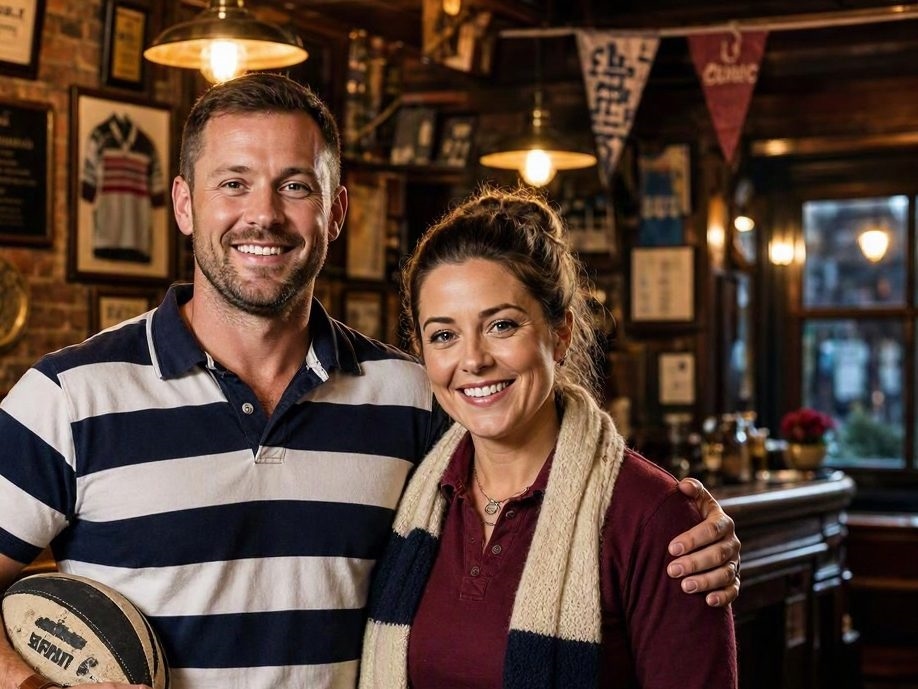
Why rugby and dating fit together
Rugby has always been a social game. The match lasts eighty minutes, but the day around it can last twelve hours: the drive to the ground, the warm-up pint, the anxious second half, the long post-mortem in the clubhouse and the songs on the coach home. Friendships are made in those hours, and plenty of relationships have started there too.
Yet the game can also make dating oddly difficult. Training eats weeknights, fixtures eat Saturdays and the Six Nations swallows most of February and March whole. Explaining all that to someone who has never cared about a line-out can feel like hard work, and a first date that clashes with a crunch match is a first date that rarely goes well.
We built Rugby Lover UK so that people for whom rugby matters could meet others who already understand. That does not mean everyone here plays, or even watches every week. It means the game is part of the picture, and nobody needs a lecture on why you cannot meet before the final whistle.
Union, league, sevens: who we mean by a rugby lover
Rugby in Britain comes in several shapes. Union dominates in much of England, Wales and Scotland. League has deep roots in the north of England. Sevens, touch and tag rugby attract their own devoted crowds, and the women's game has grown into a major part of the sport at every level.
We welcome all of it. A rugby lover, in our sense, might be a prop who has played for twenty years, a supporter who travels to every away game, a parent who coaches the under-twelves, a referee, a physio, a club volunteer who runs the bar, or someone who discovered the game recently and cannot stop talking about it. You can say which code you follow and how you are involved on your profile, so people can find the kind of rugby person they would get on with.
How we research our guides and city pages
Everything we publish is written for readers in the UK. When a guide mentions a stadium, a club or a tradition, we check the detail against sources such as the club's or stadium's own pages and reputable sports coverage, and we record the date we checked it. Grounds get renamed, transport links change and clubs move, so we revisit facts when we update a page.
Our dating advice comes from thinking hard about the real situations rugby people face: training clashes, injuries, away trips, divided loyalties at international time and partners who would rather be anywhere else on a Saturday afternoon. We avoid stereotypes, we never invent couples or stories, and we try to be useful rather than gushing.
Our comparison pages follow the same approach. We look at each rival on its own website, note what it does well and who it suits, and date our findings. Every review closes with a plain answer on who each service suits.
What we ask of every profile
The atmosphere on any site comes from the people on it, so here is our short team talk:
- Be honest. Use recent photos, your real age and an accurate picture of your life, rugby included.
- Be respectful. Treat people the way you would want a teammate to treat you, including when you decide you are not a match.
- Be patient. Get to know someone through messages before arranging to meet.
- Look after each other. Report anything that seems wrong. Our safety guide explains how.
These are the same values most rugby clubs try to live by, and they work just as well off the pitch.
Our promises
Invented success stories have no place here. No plan carries a mystery figure: sterling prices for all ten sit on the pricing page. Clubs, unions and stadiums have no tie to the site. And no website can do the hard part for you. What we can do is put you among people who already understand why the game matters.
A note on photographs and privacy
Rugby people are often recognisable in their local area, especially if they play for a well-known club. You decide how much to share. Your club can stay off the page altogether, describe it in general terms or name it once you are comfortable. Our guides suggest ways to talk about the game that feel personal without giving away more than you would like.
The third half matters too
Ask anyone who has played club rugby what they remember, and the answer is rarely a particular try. It is the people: the teammate who drove three hundred miles to a cup game, the supporter who has stood in the same spot behind the posts for forty years, the evening in the clubhouse when a stranger became a friend. Rugby is built on what happens after the whistle as much as during the match.
That is the spirit we want here. A dating site is, in the end, a way of introducing people who might otherwise never meet. We cannot recreate the warmth of a good clubhouse online, but we can give rugby people a starting point that feels familiar, a shared language and the confidence that the person on the other side of the conversation will understand why a wet Tuesday training session is non-negotiable.
We also want the site to feel welcoming to people who are newer to the game. Rugby can look closed from the outside, full of in-jokes, songs and rules that nobody seems able to explain. Everyone here started somewhere, and a partner who is keen to learn is worth a great deal.
Why we chose these first cities
We started with London, Cardiff and Edinburgh because each hosts one of the great international stadiums of the British game and each has a busy club scene around it. They are places where rugby shapes the calendar and the conversation, and where a lot of people search for dating help. More cities will follow; you can read about our current list on the city guides page.
Where to go next
Newcomers can follow the five stages on how it works. The features page explains the tools on offer, and the guides cover the questions rugby people actually ask about dating.
Ready when you are
Fancy a place where nobody rolls their eyes at a fixture clash? Then Signup Here and make rugby the first thing people learn about you.